
We regret we are unable to consider this request as it doesn’t fit with EIP criteria. Additionally, Cambridge City Council is not responsible for the main river Cam and so with your agreement, its recommended that your suggestion be forwarded to the Environment Agency for their consideration. For the purposes of the EIP process unfortunately as outlined we cannot accept the project idea and therefore will change the status of the project to rejected.
Regards
James Ogle
Stop Plastic pollution and debris in River Cam with Bubble Barriers.
From "Environmental Improvement Programme 2023-24: New bidding round"
Go to the project
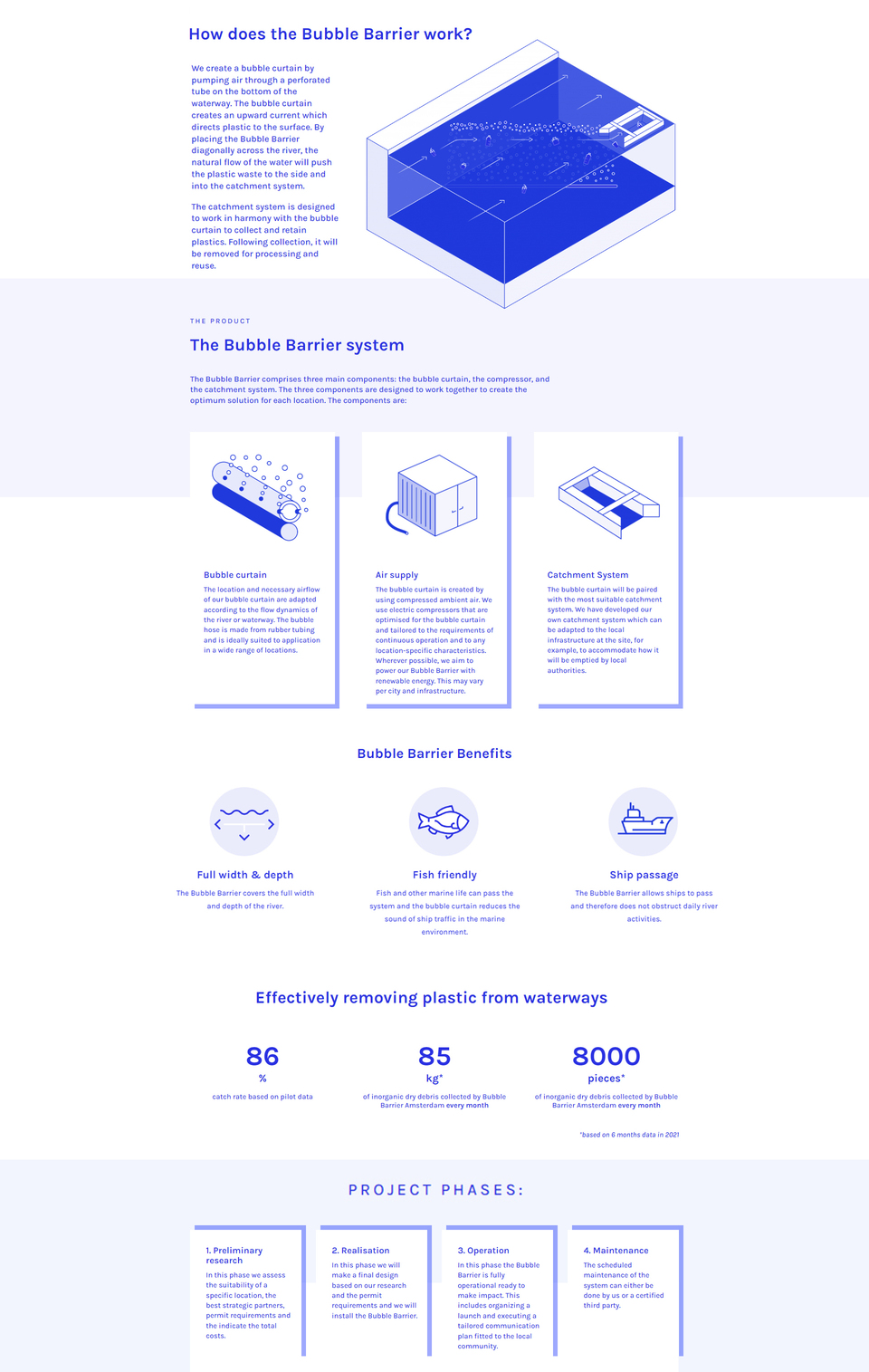
How: Install Great Bubble Barrier systems at a strategic location in the River Cam in Cambridge. These barriers use air bubbles to create a curtain across the river that diverts floating debris into collection points on the riverbank. The barrier can be customized to the local conditions of the River Cam in terms of width, depth, flow speed, etc. The bubble curtain does not harm wildlife or fish - it has been successfully implemented in some of the main canals in Amsterdam.
Why: The River Cam suffers from high levels of plastic pollution and litter entering from storm drains, runoff, and other sources. Litter cleanup initiatives only catch a portion of this debris. Bubble barriers would create a 24/7 passive capture system to improve water quality by diverting trash before it flows downstream and ultimately reaches the ocean. This demonstrates Cambridge's commitment to sustainability and taking action against plastic pollution.
Who: This project proposal was created by me after extensive research on the success of The Great Bubble Barrier technology in Netherland and other regions. I have spoken with the bubble barrier company about customizing the system for the River Cam. At this stage, I am submitting the proposal independently but would seek partnerships with local environmental groups, university researchers, and river authorities if selected for funding, to assist with maintenance, education, community engagement, and monitoring. The bubble barrier company would handle installation and provide ongoing monitoring.
Costs: The estimated budget for installing Great Bubble Barrier systems in the River Cam is £350,000 based on initial quotes from the bubble barrier company. This would cover:
- Purchase and installation of the bubble barrier system including compressors and catchment equipment.
- Site preparation and riverbed mounting materials.
- Project management and installation supervision.
- Initial testing and monitoring.
- Signage and educational materials.
The bubble barrier company would provide full-service installation, maintenance, and monitoring. The system could be implemented in phases, with the potential to add more barriers at additional strategic locations in future years.
Potential Funding: Below are some additional details on potential sources of funding and partnerships to support purchasing and installing the bubble barrier system:
- Apply for supplementary grants from government agencies and environmental foundations. Options include EU LIFE programme, The National Lottery Community Fund, EPA Innovative Water Infrastructure Grants, etc.
- Seek corporate sponsorships from sustainable brands, water companies, waste management firms, etc. Interested in positive PR and sustainability initiatives.
- Partner with Cambridge University engineering/environmental research groups. They may provide funding, students, and resources to study the system.
- Work with local environmental nonprofits (e.g. Conservators of the River Cam, Cam Valley Forum) on fundraising campaigns. Engage community donors and local businesses.
- Crowdfunding campaigns can collect smaller donations from many backers. Raise awareness and engage the public.
- Check for any available regional/national funding for pilot sustainability projects or plastic waste reduction initiatives.
- Work with the bubble barrier company to secure good financing options, payment plans, and potential discounts for the systems and services.
The key is pulling funding from multiple sources - grants, sponsors, partners, community - rather than relying solely on the Environmental Improvement Programme. I'm happy to help research and identify specific potential funding channels if selected.
Official updates
Last update: 11 August 2023
Posted on 11 August 2023
Comments(9)
Commenting is not possible because this project is currently not active.
Most recent comments have loaded.
Profile of Graham West
Posted by:Graham West
3 years ago
This is a quite an interesting and novel approach to a rather intractable problem.
Only issue is the eye watering costs but perhaps a pilot scheme could be considered paid for by the relevant parties plus some crowdfunding.
Profile of S Bhayani
Posted by:S Bhayani
3 years ago
This innovative project will attract much public support disseminated more widely by the Council and local media.
Profile of Franci Tafilaj
Posted by:Franci Tafilaj
3 years ago
@S Bhayani Thank you for your encouraging words, S Bhayani! I believe that with the support of the community and wider dissemination, this project can truly make a difference.
Profile of Cameron Holloway

Posted by:Cameron Holloway
3 years ago
This sounds like a really interesting idea! Thank you for taking the time to submit it. As you suggest, it would likely require alternative sources of funding, but it sounds like a fascinating proposal.
Profile of Franci Tafilaj
Posted by:Franci Tafilaj
3 years ago
@Cameron Holloway Thank you, Cameron! I appreciate your acknowledgment of the potential funding challenges. I am optimistic about exploring various avenues to make this project a reality. Your support means a lot!
Profile of Ian Stuchbury

Posted by:Ian Stuchbury
3 years ago
Great idea to help clean up our rivers just a shame people cannot be responsible themselves and prevent the plastic polution in the first place. Gets my vote and good luck with the project.
Profile of Franci Tafilaj
Posted by:Franci Tafilaj
3 years ago
@Ian Stuchbury Thank you for your support, Ian! It's indeed unfortunate that plastic pollution is an issue in the first place. With collective efforts like this, we hope to make a significant difference and raise awareness about responsible disposal.
Profile of David Stoughton

Posted by:David Stoughton
3 years ago
Anything to clean up the river seems positive
Profile of Franci Tafilaj
Posted by:Franci Tafilaj
3 years ago
@David Stoughton Thank you, David! We wholeheartedly agree. A cleaner river benefits everyone in the community and the environment as a whole.